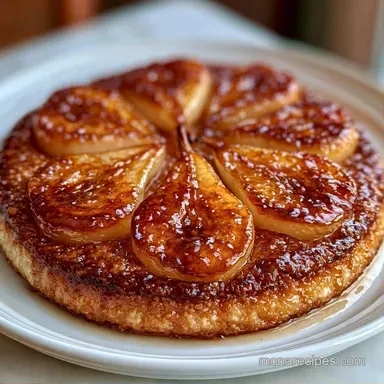
Pear Tarte Tatin with Bosc Pears
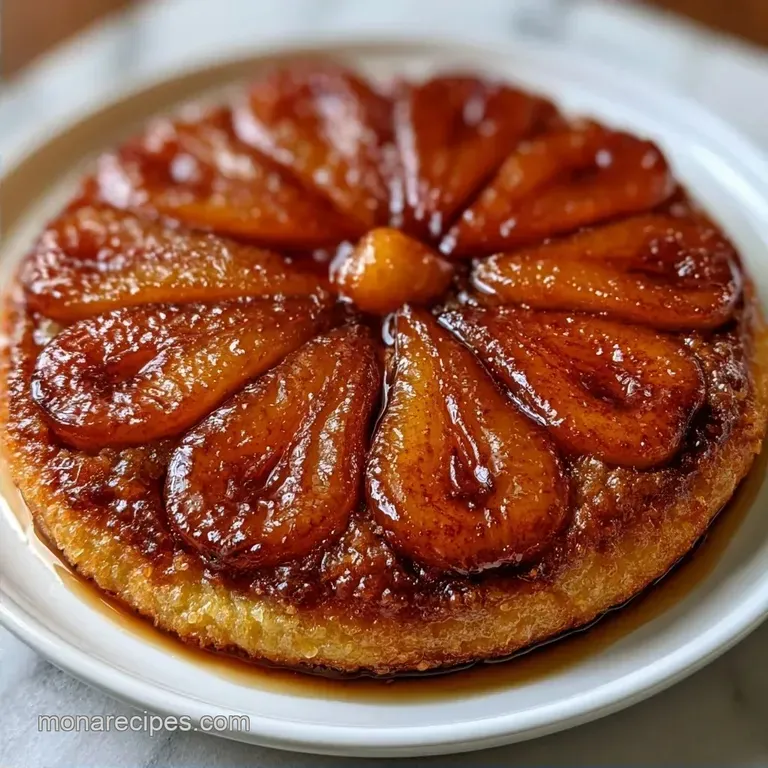
- Time: 20 minutes prep, 30 minutes cooking
- Key Profile: Rich amber caramel paired with flaky puff pastry
- Ideal for: Elegant dinner gatherings
The aroma of cinnamon and simmering sugar always brings to mind the legend of the Tatin sisters. In the 1880s, within Lamotte Beuvron, France, this inverted tart was reportedly created by chance. After one sister overcooked her fruit in butter and sugar, she quickly topped it with pastry to rescue the dessert.
This slice of French heritage shows that breaking the rules often leads to greatness. However, while the first Tarte Tatin was a fluke, we will use a measured approach to ensure the pastry stays crunchy and the fruit doesn't break down into a jam.
This specific recipe prioritizes the precise moment the caramel is finished. Removing the sugar too soon leaves it merely sweet, while waiting too long makes it bitter. We are looking for a dark, reddish-brown amber hue that evokes the taste of toasted nuts.
Pear Tarte Tatin
Wait, before we jump in, let's look at the logic. This isn't just about throwing fruit in a pan. It's about managing moisture. Pears have more water than apples, which is why we use a specific variety and a high oven temp.
The Pectin Factor: Bosc pears contain more pectin and have a denser structure. This keeps them firm so they don't collapse into a puree.
Temperature Control: The 400°F (200°C) heat is necessary to evaporate the pear juices quickly, which thickens the syrup into a glaze.
| Method | Time | Texture | Best For |
|---|---|---|---|
| Fresh Homemade Pastry | 3 hours | Flaky, rich | Special occasions |
| Frozen Puff Pastry | 20 mins | Shattering, airy | Quick hosting |
- For a firmer set
- Use only Bosc pears.
- For extra crunch
- Use turbinado sugar on top.
- For a richer taste
- Add a pinch of flaky salt to the caramel.
What Each Ingredient Does
The sugar and water create the base. I use granulated sugar because it melts evenly, while the water prevents the sugar from burning before it melts.
The butter provides the fat that emulsifies the sugar, turning a hard candy into a pourable sauce. Bosc pears are the only way to go here, as other varieties get too soft.
Lemon juice stops the pears from turning brown, and cinnamon adds a woody warmth that cuts through the sweetness of the Pear Tarte Tatin.
Ingredients List
- 115g unsalted butter, cubedWhy this? Adds richness and stops the caramel from becoming hard candy
- 200g granulated sugarWhy this? Standard melting point for consistent amber color
- 30ml waterWhy this? Ensures sugar dissolves evenly
- 5ml vanilla extractWhy this? Adds a floral note to balance the sugar
- 1.3kg Bosc pears, peeled, halved, and coredWhy this? High pectin content prevents mushiness
- 15ml lemon juiceWhy this? Prevents oxidation and adds acidity
- 1.2g ground cinnamonWhy this? Classic pairing for autumn fruit
- 250g frozen puff pastry, thawedWhy this? Provides a high rise, shatteringly crisp base
- 50g egg, beatenWhy this? Creates a golden brown wash
- 8g turbinado sugarWhy this? Adds a slight crunch and visual sparkle
Substitutes
| Original Ingredient | Substitute | Why It Works |
|---|---|---|
| Bosc Pears | Anjou Pears | Similar shape. Note: Softer texture, may compress more |
| Unsalted Butter | Salted Butter | Works fine. Note: Omit extra salt if adding |
| Puff Pastry | Shortcrust Pastry | More traditional. Note: Much denser, less airy |
The Tool Kit
You need a 10 inch cast iron skillet. This is non negotiable. Cast iron holds heat evenly, which is the only way to get a consistent caramel across the entire bottom of the Pear Tarte Tatin.
A melon baller or a small spoon is handy for coring the pears without hacking into the sides. For the pastry, a rolling pin and a sharp knife or pizza cutter work best.
Finally, you'll need a large, flat serving platter. It needs to be wider than the skillet so you can flip the tart in one confident motion.
Step-by-step Method
Time for the preparation. Being precise is essential, especially as the sugar begins to bubble.
Phase 1: Prepping the Fruit
- Peel the pears and slice them in half lengthwise, removing the cores with a melon baller or small spoon.
- Coat the pear halves in cinnamon and lemon juice. Note: This keeps the fruit from browning while the caramel is ready.
Phase 2: The Fast Track Caramel
- In a cast iron skillet over medium heat, combine 200g sugar and 30ml water. Let it simmer without stirring until it reaches a rich amber color (about 5–7 minutes).
- Quickly whisk in 115g cubed butter and 5ml vanilla extract until the sauce is velvety and smooth.
- Arrange the pears cut side down in the caramel, packing them tightly in a circle with minimal gaps.
Phase 3: The Crust and Bake
- Roll out the puff pastry and cut a circle roughly 1/2 inch wider than the skillet.
- Drape the pastry over the fruit, tucking the edges down the pan sides to seal.
- Brush on 50g beaten egg and sprinkle with 8g turbinado sugar.
- Cook for 20–25 minutes in an oven preheated to 400°F (200°C) until the pastry is deep golden brown.
Phase 4: The Critical Flip
- Remove the pan and let the tart rest for exactly 5 minutes. Note: This gives the caramel time to thicken so it doesn't run.
- Place a large platter over the skillet and flip it over in one fluid motion.
- Use a fork to gently adjust any pears for a better presentation.
Fixing Common Issues
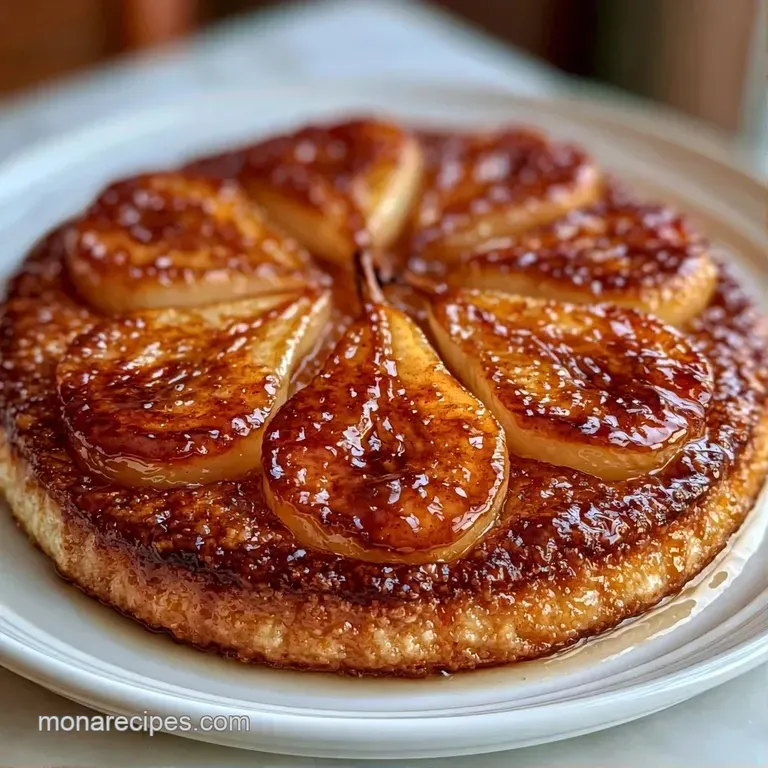
Even with a precise plan, things can happen in the kitchen. Most Pear Tarte Tatin issues come down to temperature or timing.
Fixing Burnt Caramel
If the sugar turns dark chocolate brown, it's burnt. It will taste bitter and ruin the whole dessert. Don't try to save it. Throw it out, wipe the pan clean, and start again. To avoid this, keep a cold, wet towel nearby and dip the bottom of the pan into it if the sugar is coloring too fast.
Preventing a Soggy Bottom
Sogginess happens when there's too much moisture or the oven isn't hot enough. Ensure your oven is truly at 400°F (200°C) before the pan goes in. Tucking the pastry edges tightly down the sides also creates a seal that prevents juices from leaking under the crust.
Solving the Stuck Tart
If the tart doesn't flip easily, don't panic. Put the skillet back in the oven for 2-3 minutes. This remelts the caramel and releases the pears from the bottom of the pan. Once you hear it sizzling, try the flip again.
Swaps and Tweaks
To customize the flavor, feel free to substitute the cinnamon with ground cardamom or ginger. For an added nutty element, scatter toasted sliced almonds over the pears before adding the pastry.
For more ideas using seasonal fruit, my Baked with Brown Sugar recipe is a lighter choice. Alternatively, try a Pear Crisp with an oat topping for a more rustic and simple alternative to a tart.
Those needing a gluten-free option can use high-quality frozen GF puff pastry; while slightly denser, it still provides the essential lift. For a dairy-free version, a premium vegan butter block works well, though be aware it may brown a bit faster than traditional butter.
Saving and Reheating
Store any leftover Pear Tarte Tatin in a sealed box in the chiller for up to 3 days. Don't wrap it in plastic directly against the crust, or it will lose its crispness.
To reheat, avoid the microwave. It will make the pastry chewy. Instead, place a slice on a baking sheet and pop it in the oven at 350°F (175°C) for about 5-10 minutes until the edges sizzle.
Waste nothing. If you have leftover pear cores and peels, simmer them with a bit of water and sugar to make a simple pear syrup for pancakes.
Best Ways to Serve
This dessert is rich, so you need something to cut through the sugar. A dollop of crème fraîche or a scoop of high-quality vanilla bean ice cream is the standard. The cold cream against the warm caramel is the best part.
For a more modern twist, serve it with a side of sharp blue cheese or a drizzle of salted caramel sauce. If you want to keep it light, a few fresh raspberries on the side add a bright acidity that balances the mahogany pears.
The Hidden Logic
I've spent a lot of time testing the ratios for this Pear Tarte Tatin. The most important part is the water to sugar ratio. The 30ml of water ensures that the sugar crystals dissolve completely before the water evaporates, which prevents the caramel from seizing.
Another point often missed is the resting period. Letting the tart sit for 5 minutes before flipping isn't just for safety. It allows the caramel to move from a liquid state to a slightly more viscous glaze, ensuring it clings to the fruit rather than pooling on the platter.
The Steam Vent Secret
The puff pastry acts as a lid, but it also allows steam to escape. As the pears cook, they release water. The pastry absorbs some of this, but the heat of the oven evaporates the rest. This concentration of sugars is what creates that intense flavor.
Right then, you're ready to try this. Just remember: trust the color of the caramel and don't be afraid of that final flip. You've got this!
Recipe FAQs
Can pears be used for tarte tatin?
Yes, they make a wonderful alternative to apples. Bosc pears are ideal because they hold their shape during the baking process.
What is the secret to a perfect flip?
Wait exactly 5 minutes after removing the pan from the oven. This allows the caramel to set slightly so the pears don't slide.
Which fruits work best in this style of tart?
Firm fruits like Bosc pears or tart apples are the best choices. These varieties prevent the tart from becoming too mushy.
Is it true that pears always substitute for apples in pastry?
That's a myth. Pears have a higher water content and softer texture, which can make some crusts soggy if not handled correctly.
Why does the caramel sometimes burn?
This usually happens if the sugar is stirred while melting. Let the sugar and water bubble undisturbed until they reach a deep amber hue.
How to achieve a golden crust?
Coat the pastry top with beaten egg and a sprinkle of turbinado sugar. Bake for 20–25 minutes at 400°F (200°C).
Pear Tarte Tatin for 6 Servings